WHY MAKE IT
A little comfort, a lot of flavor.
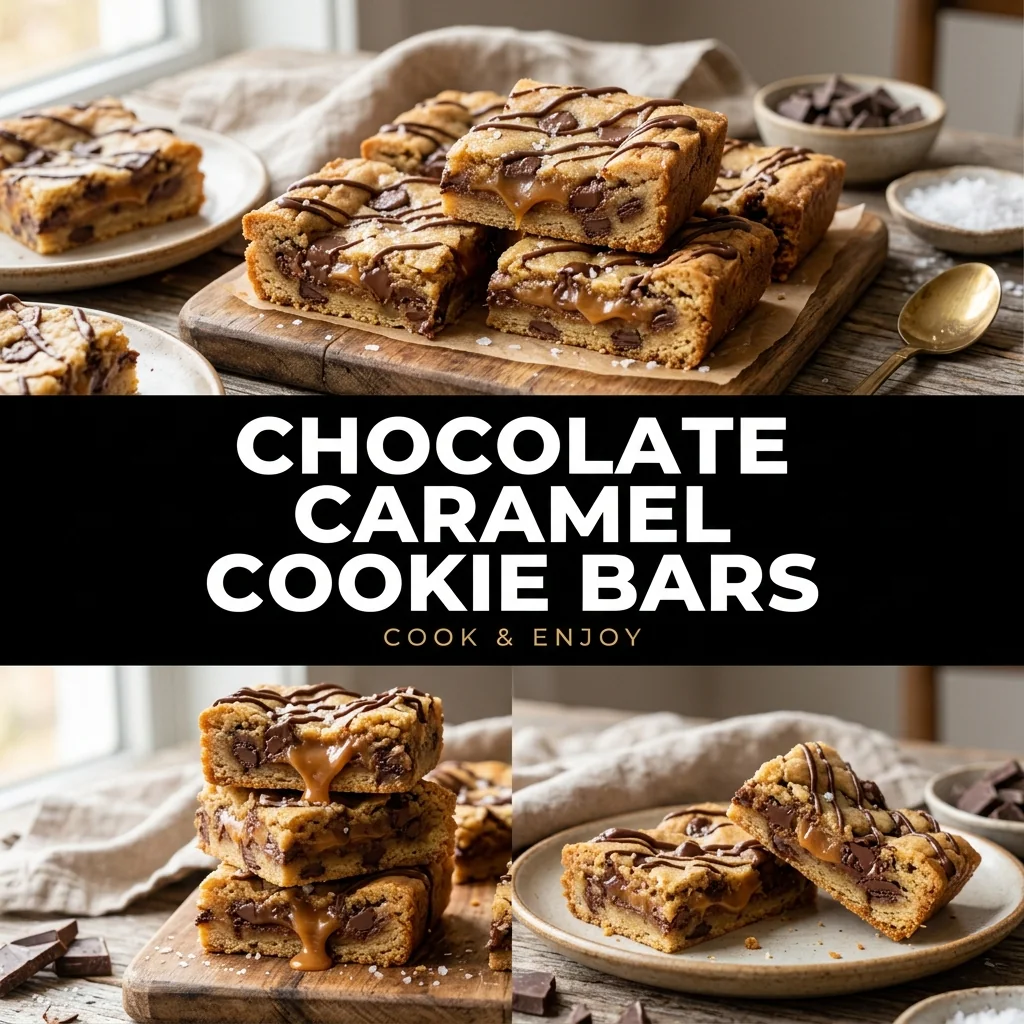
These layered bars combine the textural satisfaction of a classic chocolate chip cookie with the molten luxury of a salted caramel center. The primary challenge when layering caramel between raw batters is managing viscosity and heat transfer. By par-baking the lower crust, you establish a solid foundation that supports the molten caramel layer without absorbing it. Melted butter combined with dark brown sugar delivers deep molasses notes and ensures the cookie dough remains pliable and chewy, complementing the gooey, cream-enriched caramel center rather than turning crumbly.
Managing Caramel Consistency
Unwrapped soft caramel candies melted on their own become rock-hard and brittle once returned to room temperature. Introducing heavy cream provides butterfat and moisture, transforming the melted candies into a stable, sliceable caramel layer that remains soft and gooey without running off the plate. Melting the mixture gently in short bursts avoids scorching the dairy sugars. Stirring flaky sea salt directly into the warm cream mixture cuts through the heavy sweetness, balancing the rich semi-sweet chocolate chips in every bite.
The Importance of Par-Baking the Base
Par-baking establishes a structural heat barrier. If raw dough is topped with liquid caramel, the caramel will seep downward into the dough, disrupting the gluten matrix and preventing the leavening action of baking soda. Baking the lower dough sheet for ten minutes sets the starches and creates a sealed, firm surface capable of holding the dense caramel aloft. The brief rest before pouring the caramel ensures that the crust does not crack under the weight of the warm liquid.
Clean Slicing and Temperature Handling
Attempting to slice these bars while warm will cause molten caramel to spill out, destroying the layered structure. Cooling the pan completely at room temperature releases trapped steam, while an additional hour of refrigeration stabilizes the caramel and resets the butterfat in the cookie layers. Use the parchment paper sling to lift the entire block cleanly onto a cutting board, then slice into neat squares using a sharp, non-serrated chef's knife wiped clean with a warm, damp cloth between each slice.
Before you start
Par-baking the bottom cookie layer is mandatory. If you pour heavy caramel directly over raw dough, the caramel sinks to the metal pan base and scorches during baking, while leaving the bottom crust raw and gummy. Leaving a slight 1/4-inch border around the caramel prevents it from adhering stubbornly to the sides of the pan as it bubbles.
THE RECIPE
Chocolate Caramel Cookie Bars
16 servings · 25 minutes preparation · 32 minutes cooking · 120 minutes cooling, chilling or resting
Ingredients
Step-by-step instructions
- Preheat your oven to 350°F (177°C) and line a 9x9-inch square metal baking pan with parchment paper, leaving a 2-inch overhang on all sides, then lightly coat the parchment with nonstick cooking spray.
- Whisk together all-purpose flour, baking soda, and fine sea salt in a medium bowl to evenly distribute the leavener.
- In a large bowl, whisk the melted butter, dark brown sugar, and granulated sugar until glossy, then vigorously whisk in the room-temperature eggs and vanilla extract until fully emulsified.
- Stir the dry flour mixture into the wet ingredients using a wooden spoon or spatula just until combined, then fold in 1 cup of the semi-sweet chocolate chips.
- Press half of the cookie dough evenly into the bottom of the prepared pan and bake at 350°F (177°C) for 10 to 12 minutes until lightly puffed and set at the edges; let stand 5 minutes.
- While the base bakes, combine the unwrapped soft caramels and heavy cream in a medium microwave-safe bowl, heating in 30-second bursts and stirring thoroughly between bursts until completely melted and smooth, then stir in the flaky sea salt.
- Pour the warm caramel filling across the par-baked cookie crust, spreading it to within 1/4 inch of the pan edges, and scatter the remaining 1/2 cup of chocolate chips over the warm caramel layer.
- Flatten small portions of the remaining raw cookie dough between your palms and arrange them across the caramel layer, leaving small gaps where the caramel peeks through.
- Return the pan to the oven and bake at 350°F (177°C) for 18 to 20 minutes until the top cookie crust is deep golden brown and the exposed caramel bubbles gently, then cool completely on a wire rack for 1 hour before chilling in the refrigerator for 1 hour to set before slicing.
Kitchen notes
Par-baking the bottom cookie layer is mandatory. If you pour heavy caramel directly over raw dough, the caramel sinks to the metal pan base and scorches during baking, while leaving the bottom crust raw and gummy. Leaving a slight 1/4-inch border around the caramel prevents it from adhering stubbornly to the sides of the pan as it bubbles.
Storage & make-ahead
Store sliced cookie bars in an airtight container at room temperature for up to 3 days, or refrigerate for up to 7 days for firmer, chewier caramel. To serve chilled bars soft, let them stand at room temperature for 20 minutes or microwave an individual bar for 8 to 10 seconds. Freeze fully cooled, sliced bars wrapped in plastic and foil for up to 2 months; thaw overnight in the refrigerator.
An original recipe guide inspired by themes in our Pinterest research. Recipe has not been independently kitchen-tested. AI-generated image is illustrative; your finished dish may look different.
Frequently asked questions
Can I use homemade caramel sauce instead of melted soft caramels?
Most homemade pourable caramel sauces contain too much moisture, which makes the cookie dough soggy and prevents the bars from setting cleanly. Use firm, chewy block caramels or individually wrapped soft caramel squares melted with heavy cream as specified.
Why did my top cookie layer stay raw while the caramel burned?
This happens if the dough patches placed on top of the caramel were too thick. Flatten the remaining dough into thin, coin-sized discs between your fingers before scattering them across the caramel so they bake through evenly within 20 minutes.
Can I use dark chocolate chips instead of semi-sweet?
Yes. Bittersweet or dark chocolate chips with 60% to 70% cacao content provide an exceptional flavor contrast against the intense sweetness of the salted caramel filling, and they can be substituted at an exact 1:1 ratio by weight.