WHY MAKE IT
A little comfort, a lot of flavor.
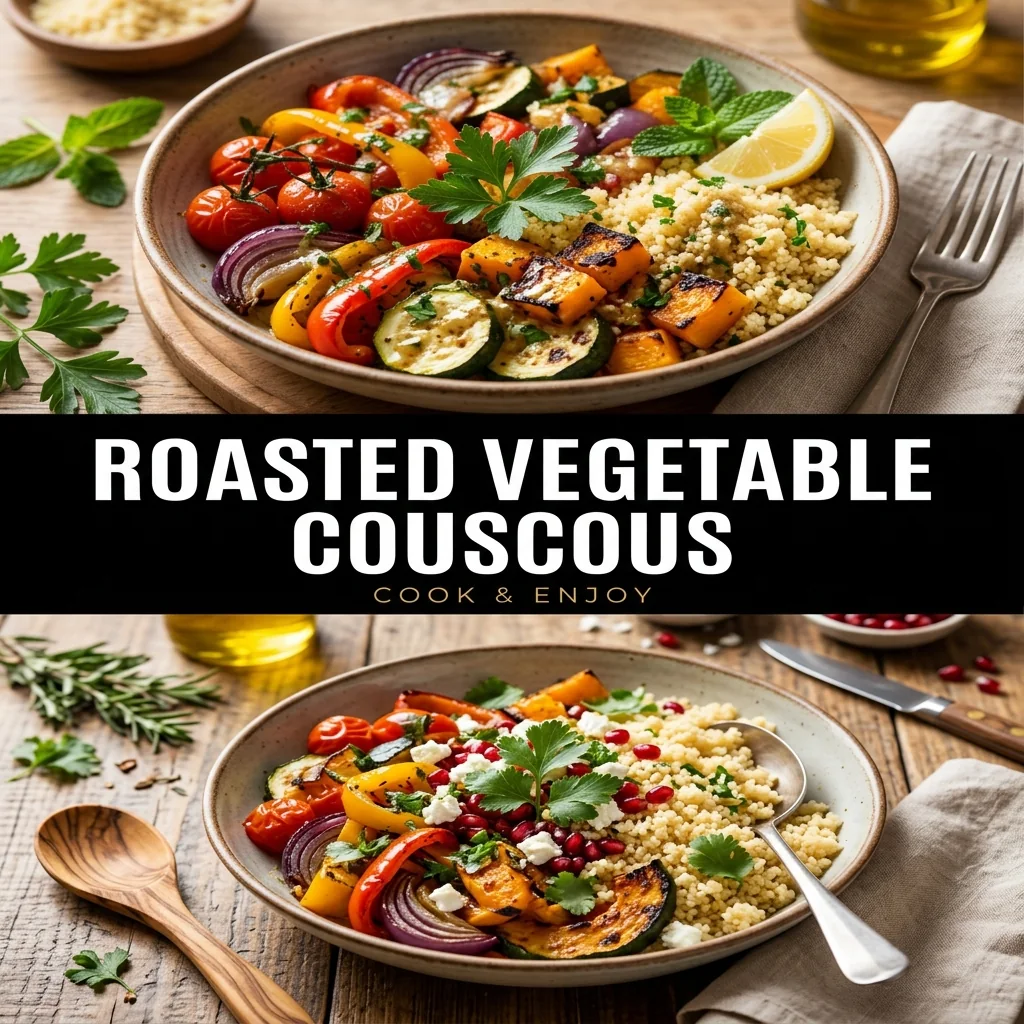
Standard Moroccan couscous consists of tiny steamed granules of semolina that rehydrate in mere minutes, making it one of the most efficient starch foundations for weeknight cooking. When paired with high-heat roasted summer squash, sweet peppers, and hearty legumes, the mild grain absorbs pan drippings and bright citrus dressings exceptionally well. Roasting concentrates the natural sugars within the vegetables, creating rich caramelization that balances the zesty notes of fresh lemon juice, parsley, and mint. This dish functions equally well as a standalone vegetarian main dish or as an accompaniment to grilled proteins, offering balanced textures ranging from creamy chickpeas to fluffy, tender grains.
Selecting and Preparing the Grains
Moroccan couscous differs significantly from large-pearl Israeli or Lebanese couscous in size and preparation. Because Moroccan couscous granules are tiny, standard boiling on an active burner leads to a dense, soggy porridge. Steeping the grain in simmering liquid off the heat ensures rapid, even hydration. Using salted vegetable stock instead of plain water builds foundational savoriness from the inside out. Once steeped, immediately separating the granules with the tines of a fork prevents clumps from compacting, yielding an airy base ready to carry dressing.
Achieving Caramelized Roasted Vegetables
Roasting vegetables requires adequate surface contact and hot dry air. Crowding the baking sheet causes squash and peppers to release moisture that gets trapped, boiling the vegetables in their own steam rather than roasting them. Use an 18-by-13-inch half-sheet pan to give every piece breathing room. Cutting the zucchini, squash, and peppers to a uniform half-inch dimension guarantees they soften at the same rate. Thoroughly drying canned chickpeas before tossing them with oil allows their outer skins to crisp attractively in the 425°F oven.
Finishing and Temperature Control
Letting the couscous rest for a few minutes before incorporating delicate herbs preserves their vibrant green color and punchy aromatics. If mixed into scorching hot grains straight from the pot, mint and parsley darken and develop a stewed flavor. Fresh lemon juice supplies necessary acidity to cut through the richness of the olive oil and starchy chickpeas. For optimal flavor release, serve the dish warm or at ambient room temperature, allowing the toasted cumin and olive oil notes to bloom fully.
Before you start
For distinct, separate grains, never boil Moroccan couscous directly over active heat like traditional pasta. Instead, pour the grains into freshly boiled broth, cover tightly, and allow residual heat to steam them. If vegetables produce moisture on the baking sheet, roast them uncovered at high heat on parchment paper rather than foil, keeping them in an even layer to promote caramelization rather than steaming.
THE RECIPE
Roasted Vegetable Couscous
4 servings · 20 minutes preparation · 25 minutes cooking · 10 minutes cooling, chilling or resting
Ingredients
Step-by-step instructions
- Position an oven rack in the center position and preheat the oven to 425°F (218°C). Line an 18-by-13-inch rimmed baking sheet with parchment paper to prevent sticking and simplify post-cooking cleanup.
- Tumble the diced zucchini, yellow squash, red bell pepper, red onion wedges, and drained chickpeas directly onto the prepared baking sheet. Drizzle with 2 tablespoons of extra-virgin olive oil and season evenly with cumin, smoked paprika, 0.75 teaspoon kosher salt, and black pepper.
- Spread the seasoned vegetables into a strict single layer across the pan without overcrowding. Transfer the sheet pan to the oven and roast for 20 to 25 minutes, stirring midway through, until the squash edges are browned and tender when pierced with a fork.
- While vegetables roast, bring the vegetable broth to a rolling boil in a 2-quart saucepan over medium-high heat. Whisk in the remaining 0.25 teaspoon kosher salt, remove the pan entirely from heat, and immediately stir in the dry Moroccan couscous.
- Cover the saucepan tightly with a secure lid and allow the grains to stand undisturbed off heat for 5 minutes. The couscous will rapidly absorb the hot liquid, swelling into tender, individual granules without turning waterlogged or sticky.
- Remove the saucepan lid and fluff the couscous thoroughly using a fork to separate the grains. Transfer the fluffed grains into a large, wide mixing bowl, then let sit uncovered for 5 minutes so excess steam escapes safely before assembly.
- Scrape the hot roasted vegetables and crisp chickpeas into the bowl with the fluffed couscous. Drizzle with the remaining 1 tablespoon of extra-virgin olive oil and fresh lemon juice, then scatter the chopped parsley and mint over the top.
- Gently fold the ingredients together using a flexible spatula until the vegetables and aromatic herbs are uniformly distributed. Taste and adjust seasoning with additional salt or lemon juice if desired, then spoon into wide serving bowls to serve warm.
Kitchen notes
For distinct, separate grains, never boil Moroccan couscous directly over active heat like traditional pasta. Instead, pour the grains into freshly boiled broth, cover tightly, and allow residual heat to steam them. If vegetables produce moisture on the baking sheet, roast them uncovered at high heat on parchment paper rather than foil, keeping them in an even layer to promote caramelization rather than steaming.
Storage & make-ahead
Cool leftovers to room temperature and transfer to an airtight container within 2 hours of preparation. Store refrigerated at or below 40°F (4°C) for up to 4 days. Reheat gently in a microwave-safe dish or a covered skillet with a splash of broth until steaming, verifying an internal temperature of at least 165°F (74°C) with a food thermometer.
An original recipe guide inspired by themes in our Pinterest research. Recipe has not been independently kitchen-tested. AI-generated image is illustrative; your finished dish may look different.
Frequently asked questions
Can I use pearl or Israeli couscous instead of standard Moroccan couscous?
Yes, but cooking method and liquid requirements change. Pearl couscous requires gentle simmering directly in liquid on the stovetop for 8 to 10 minutes until tender, rather than a simple off-heat steep. Check package liquid ratios before cooking.
Why did my couscous turn out mushy and clumpy?
Mushy couscous typically stems from excess liquid or boiling the grain over direct heat. Measure liquid precisely, remove the pot from the burner before stirring in grains, and fluff thoroughly with a fork after the resting period.
Can this dish be served chilled as a cold grain salad?
Yes, it eats well cold or at room temperature. When serving chilled, dress with an additional squeeze of fresh lemon juice and a light drizzle of olive oil just before eating, as chilled starch tends to absorb surface moisture.