WHY MAKE IT
A little comfort, a lot of flavor.
Roasted red pepper hummus marries the earthy, nutrient-dense profile of classic chickpea dip with the concentrated sweetness of charred produce. Pureeing freshly blistered red peppers directly into the chickpea base imparts a striking terracotta hue and a rounded smokiness that outshines plain variations. Tahini provides a luscious, nutty richness that coats the palate, balanced by the bright acidity of fresh lemon juice and the aromatic punch of raw garlic. Smoked paprika amplifies the fire-roasted undertones of the peppers, creating a versatile dip that excels on mezze platters, spreads cleanly inside warm pita bread, and pairs naturally with crisp garden vegetables.
Charring and Steaming Peppers
Achieving authentic roasted flavor requires blistering the peppers until the outer skins turn entirely blackened and brittle. Under-broiling leaves the skins tight and tough, preventing easy removal and leaving papery fragments in the puree. Trapping the charred peppers under a plate traps boiling steam against the flesh, loosening the delicate outer membrane within ten minutes. Peeling off this charred exterior yields tender, caramelized flesh packed with natural sugars and delicate smoke, which integrates smoothly into the puree without muddying its texture.
The Function of Tahini and Aquafaba
Tahini functions as the primary emulsifying agent in authentic hummus, contributing velvety structure and rich sesame fats. Stir the jar thoroughly before measuring, as sesame solids settle heavily beneath floating oil during storage. The reserved canning liquid, known as aquafaba, contains soluble starches released by the chickpeas during processing. Adding three tablespoons of this liquid provides necessary hydration while emulsifying the olive oil and tahini into a cohesive spread, resulting in an airy texture without diluting flavor like plain tap water would.
Serving and Garnishing Options
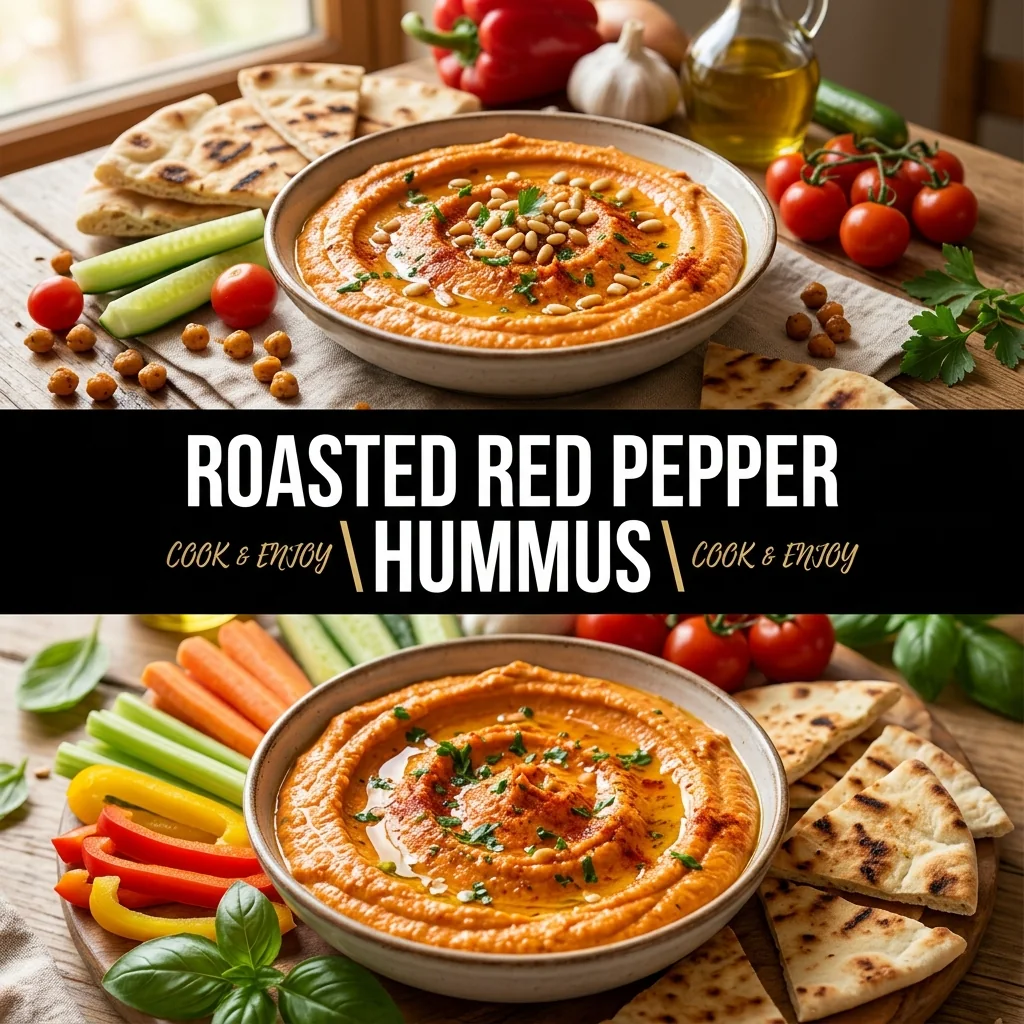
Present roasted red pepper hummus at room temperature rather than ice cold, as chilling dulls the palate's perception of lemon and aromatic garlic. Create wide, sweeping swirls with the back of an offset spatula or large soup spoon to catch finishing touches. A final ribbon of peppery extra-virgin olive oil, a dusting of vibrant smoked paprika, and torn flat-leaf parsley provide textural contrast. Serve with crisp cucumber rounds, radish coins, toasted za'atar pita chips, or warm flatbreads to showcase the dip's balanced consistency.
Before you start
The key to achieving ultra-creamy hummus is whipping the tahini and fresh lemon juice together before adding the chickpeas and roasted peppers. This mechanical emulsification incorporates air into the sesame paste, lightening its dense texture. Additionally, pureeing the ingredients for a full three to four minutes breaks down the chickpea skins completely, eliminating grittiness without requiring you to peel individual legumes.
THE RECIPE
Roasted Red Pepper Hummus
6 servings · 15 minutes preparation · 20 minutes cooking · 10 minutes cooling, chilling or resting
Ingredients
Step-by-step instructions
- Adjust the top oven rack four inches below the broiler element and turn the oven broiler on high.
- Place the bell pepper halves cut-side down on an ungreased baking sheet and broil for twelve to fifteen minutes until the skins are completely charred and black.
- Transfer the blackened peppers immediately to a heat-safe bowl, cover tightly with a plate, and let them rest to steam for ten minutes.
- Peel the loosened blackened skins off the peppers with your fingers, discard the skins and loose seeds, and roughly chop the softened flesh.
- Add the tahini and fresh lemon juice to the bowl of a food processor fitted with the steel blade, processing for one minute until pale and whipped.
- Add the chopped roasted peppers, drained chickpeas, reserved canning liquid, chopped garlic, cumin, smoked paprika, kosher salt, and two tablespoons of olive oil to the food processor.
- Process continuously for three to four minutes, stopping once halfway through to scrape down the bowl sides, until the hummus is completely smooth and creamy.
- Spread the hummus into a shallow serving bowl using the back of a spoon, drizzle with the remaining tablespoon of olive oil, and sprinkle with parsley before serving.
Kitchen notes
The key to achieving ultra-creamy hummus is whipping the tahini and fresh lemon juice together before adding the chickpeas and roasted peppers. This mechanical emulsification incorporates air into the sesame paste, lightening its dense texture. Additionally, pureeing the ingredients for a full three to four minutes breaks down the chickpea skins completely, eliminating grittiness without requiring you to peel individual legumes.
Storage & make-ahead
Refrigerate perishables promptly within two hours. Transfer the hummus to an airtight glass container and chill in the refrigerator for up to four days. If serving leftover hummus warm, reheat gently in a covered saucepan over low heat until it reaches 165 F (74 C). Drizzle with a fresh drop of olive oil after chilling to restore sheen. In hot conditions above 90°F (32°C), refrigerate perishable food within 1 hour.
An original recipe guide inspired by themes in our Pinterest research. Recipe has not been independently kitchen-tested. AI-generated image is illustrative; your finished dish may look different.
Frequently asked questions
Can I use jarred roasted red peppers instead of roasting fresh ones?
Yes, you can substitute jarred roasted peppers. Drain them thoroughly and pat them dry with paper towels before measuring approximately one cup of chopped pepper, which prevents excess briny liquid from thinning your finished hummus.
Why is my hummus dense instead of fluffy?
Hummus becomes dense when it lacks adequate liquid or processing time. Add an extra tablespoon of reserved chickpea liquid or ice-cold water, and blend for an additional two full minutes to incorporate air into the emulsion.
Can I freeze roasted red pepper hummus?
Yes, freeze hummus in an airtight container for up to three months. Thaw overnight in the refrigerator, then stir briskly with a fork to reincorporate any separated liquids, adding a fresh splash of lemon juice if needed.