WHY MAKE IT
A little comfort, a lot of flavor.
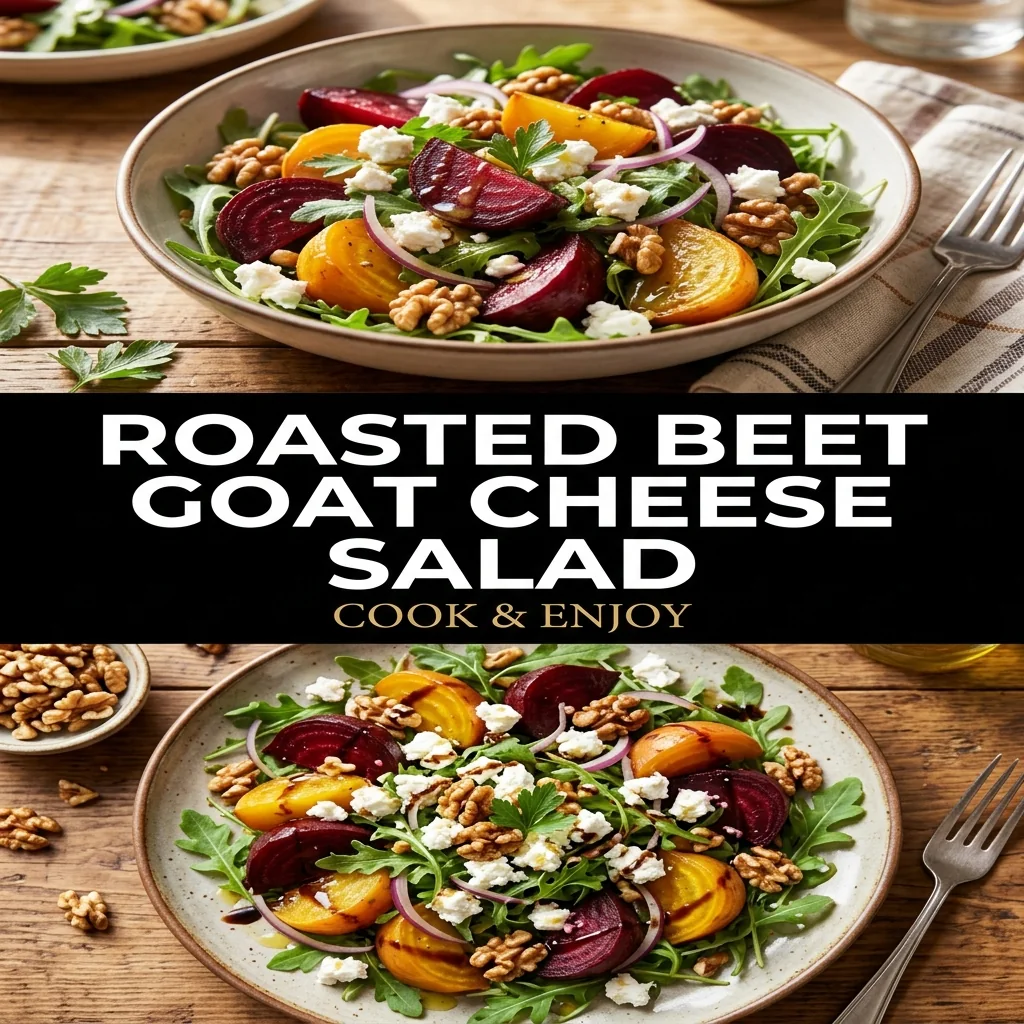
Roasted beet and goat cheese salad is an enduring culinary classic that celebrates contrasting flavors and striking textural harmony. Roasting root vegetables in a tightly crimped foil packet concentrates their natural sucrose through gentle steaming, transforming dense beets into tender, jewel-toned gems. Peppery baby arugula offers an assertive, bitter counterweight to the sweet earthy roots, while fresh chèvre brings cool, creamy decadence that softens the sharpness of the greens. Toasted walnuts contribute a crucial woodsy crunch that grounds each bite. Brought together by a sharp shallot and aged balsamic vinaigrette, this salad delivers visual elegance and culinary balance, serving equally well as a sophisticated dinner party starter or a satisfying lunch.
Roasting Mechanics for Root Vegetables
Roasting beets enclosed within heavy-duty foil packets replicates a gentle braise inside dry oven heat. The moisture trapped inside the parcel turns to steam, tenderizing the fibrous pectins of the beets without drying their exteriors. Keeping the skins intact during the roasting period prevents flavor and nutrient loss into the baking pan. Testing doneness with a thin paring knife ensures accuracy; if the blade encounters firm resistance at the core, crimp the foil closed and return the packet to the 400°F oven for an additional ten minutes until tender throughout.
Managing Color Bleed and Texture
Red beets contain vibrant betalain pigments that readily bleed into other ingredients, turning pale goat cheese and crisp greens uniformly pink if tossed together aggressively. To maintain clean visual presentation, slice your beets on a designated board and toss the arugula with dressing independently first. Arrange the beet slices across the dressed greens, followed by the walnuts and crumbled chèvre. If utilizing both red and golden beets, keep them sliced on separate sides of the board to highlight their distinct visual contrast on the final platter.
Emulsion and Dressing Dynamics
The dressing relies on Dijon mustard as a natural emulsifier, linking the extra-virgin olive oil with aged balsamic vinegar. Balsamic vinegar provides a rich, syrupy sweetness that echoes the caramelized sugars in the roasted beets while cutting through the chalky richness of goat cheese. Finely minced shallots steep in the acid, releasing gentle sweetness without the pungent burn of raw yellow onion. Drizzling the remaining dressing directly over the cheese and warm beets just before service ensures every textural component carries equal seasoning.
Before you start
Let the beet packet cool until safe to handle, then rub off the skins with a paper towel. If a patch of skin resists, trim it with a small knife. Wear gloves if desired to avoid staining your hands. Briefly chilling the goat cheese makes it easier to crumble into distinct pieces.
THE RECIPE
Roasted Beet Goat Cheese Salad
4 servings · 25 minutes preparation · 50 minutes cooking · 25 minutes cooling, chilling or resting
Ingredients
Step-by-step instructions
- Preheat the oven to 400°F (200°C). Scrub the trimmed beets clean under cool running water, pat dry, and place onto a large sheet of heavy-duty aluminum foil. Drizzle with 1 tablespoon olive oil and sprinkle with 1/4 teaspoon kosher salt.
- Wrap the foil tightly around the beets to create a sealed packet. Place the packet onto a sturdy rimmed baking sheet and roast in the preheated oven for 45 to 50 minutes until a paring knife glides easily through the center of the largest beet.
- While the beets roast, place the raw walnut halves into a dry 8-inch skillet over medium heat. Toast for 4 to 5 minutes, shaking the pan frequently until fragrant and lightly browned, then transfer immediately to a plate to cool.
- Remove the beet packet from the oven, crimp open the top foil carefully to let steam escape, and let rest undisturbed for 20 minutes until cool enough to handle safely.
- Using paper towels to protect your hands, rub the skins firmly away from the warm roasted beets; the skins should slide off easily. Slice the peeled beets into 1/2-inch thick wedges and let rest on a cutting board for 5 minutes.
- In a small mixing bowl, whisk together the extra-virgin olive oil, aged balsamic vinegar, Dijon mustard, minced shallot, the remaining 1/4 teaspoon kosher salt, and black pepper until emulsified.
- Arrange the fresh baby arugula across a large serving platter. Drizzle half of the prepared balsamic dressing over the greens and toss gently with your hands to lightly coat every leaf.
- Scatter the sliced roasted beets, toasted walnut halves, and crumbled chilled goat cheese evenly across the bed of dressed arugula. Drizzle the remaining vinaigrette directly over the beets and cheese, then serve immediately.
Kitchen notes
Let the beet packet cool until safe to handle, then rub off the skins with a paper towel. If a patch of skin resists, trim it with a small knife. Wear gloves if desired to avoid staining your hands. Briefly chilling the goat cheese makes it easier to crumble into distinct pieces.
Storage & make-ahead
Store leftover roasted beets, dressing, and walnuts separately from the arugula whenever possible. Once dressed, delicate arugula will wilt within a few hours. If already assembled, store in an airtight container in the refrigerator at or below 40°F (4°C) promptly within 2 hours and consume within 24 hours. Undressed roasted beets keep refrigerated for up to 4 days. Serve cold; do not reheat. In hot conditions above 90°F (32°C), refrigerate perishable food within 1 hour.
An original recipe guide inspired by themes in our Pinterest research. Recipe has not been independently kitchen-tested. AI-generated image is illustrative; your finished dish may look different.
Frequently asked questions
Can I use store-bought pre-cooked vacuum-packed beets?
Yes. If pressed for time, high-quality steamed or roasted vacuum-packed beets work well. Skip the oven roasting steps, slice the prepared beets directly into 1/2-inch wedges, and dress as directed. While convenient, freshly roasted whole beets provide deeper caramelized flavor and firmer texture.
What is a good nut substitution for walnuts?
Toasted pecan halves or slivered almonds make excellent substitutes for walnuts. For a nut-free alternative, toast raw pepitas (pumpkin seeds) or sunflower seeds in a dry skillet for 2 to 3 minutes until puffed and fragrant, adding an identical savory crunch.
Can I substitute another cheese for the fresh goat cheese?
Crumbled feta cheese, shaved Parmigiano-Reggiano, or a mild gorgonzola work wonderfully. Feta introduces a saltier, briny profile, while aged Parmesan adds savory umami that balances the sweet roasted beets without the tangy creaminess characteristic of fresh chèvre.