WHY MAKE IT
A little comfort, a lot of flavor.
The posset is one of Britain's most historic culinary creations, evolving from a medieval spiced medicinal beverage into an exquisite chilled custard that requires neither gelatin, cornstarch, nor eggs. The magic of the modern posset lies in food chemistry: when the citric acid of fresh lemon juice is introduced to boiled heavy cream, it lowers the pH, causing the milk protein casein to gently coagulate and form a cohesive, tender gel trapped in rich dairy fat. Adding a vibrant ribbon of seedless raspberry puree provides tart, floral berry notes that balance the creamy richness of the dessert. Served in petite glass vessels, possets deliver maximum elegance with minimal stovetop effort.
The Chemistry of Acid-Set Custard
Unlike baked custards that rely on egg yolk proteins coagulating under heat, a posset sets purely through acid destabilization. When heavy cream boils with sugar, water evaporates, concentrating butterfat and caseins. Lemon juice provides the acidity needed for the cream to set as it chills. At this acidity, negative electrical charges on casein micelles are neutralized, allowing them to link together into a delicate, continuous microscopic network. This structural mesh traps the fat droplets and moisture, resulting in an exceptionally glossy, velvety texture that holds its shape under a spoon once fully chilled.
Selecting Ingredients and Measuring Acid
Freshly squeezed lemon juice is mandatory; bottled juice contains preservatives and lacks the punchy, clean aromatic acidity necessary to set the cream reliably. Strain the juice through fine mesh before measuring to ensure no seeds or pulp enter the custard base. Similarly, high-fat heavy cream with minimal stabilizers (such as carrageenan) yields the cleanest mouthfeel. The 3-minute boil must be timed accurately once full bubbles emerge across the surface, ensuring adequate sugar dissolution and mild concentration without caramelizing the dairy sugars.
Serving Vessels and Presentation Ideas
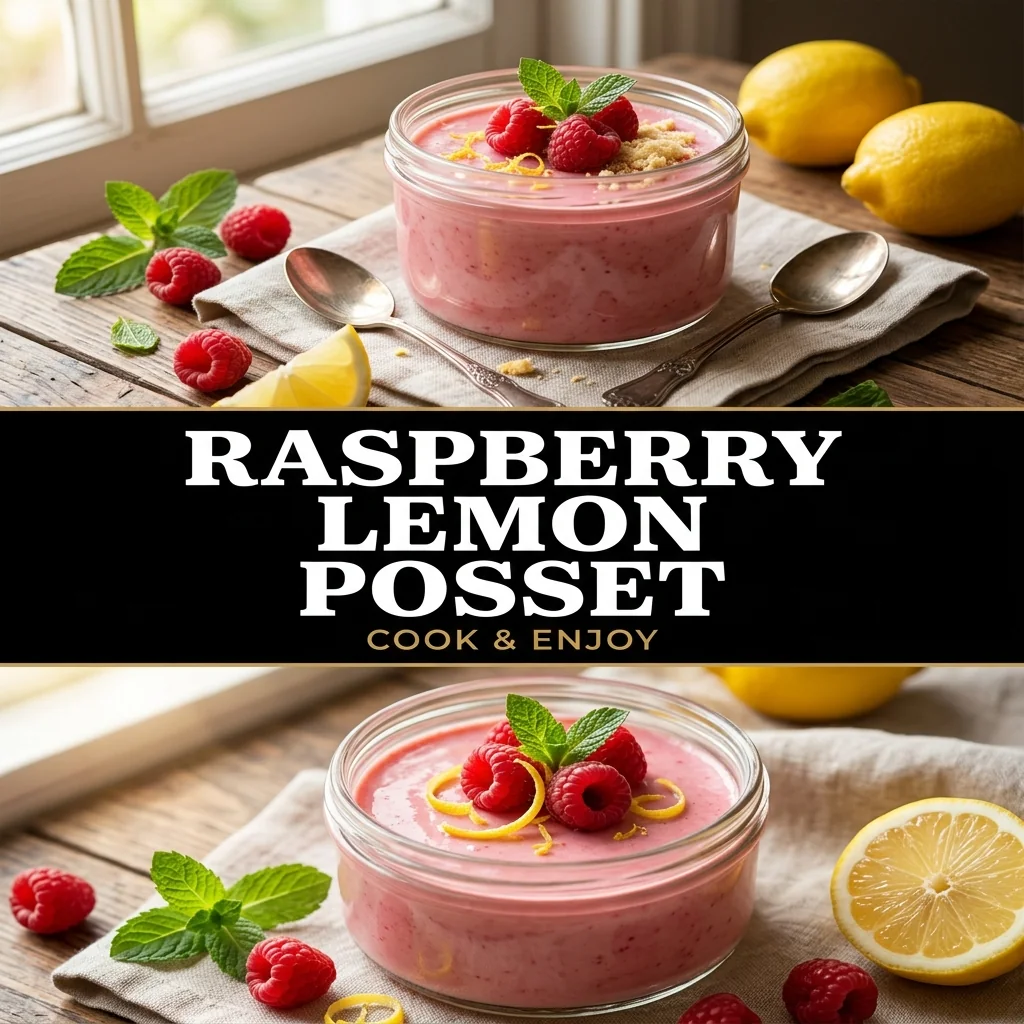
Because posset is remarkably rich and concentrated in flavor, portion size should remain modest. Small 4-ounce glass ramekins, vintage stemware, or ceramic espresso cups make ideal presentation dishes. The translucent glassware showcases the contrast between the pale ivory lemon base and the crimson swirl of raspberry coulis. Pair this dessert with crisp shortbread cookies, ginger snaps, or almond tuiles to add a crunchy counterpoint to the velvet-smooth cream.
Before you start
Milk fat percentage is the single most critical factor in posset success. You must use standard heavy whipping cream containing at least 36% to 40% milk fat. Lower-fat dairy like light cream, half-and-half, or milk lacks sufficient fat globules to hold the acid-coagulated protein structure, and the dessert will fail to set, remaining liquid. Boil the cream and sugar for the full 3 minutes to reduce water content and activate the casein binding before introducing the citrus juice.
THE RECIPE
Raspberry Lemon Posset
6 servings · 20 minutes preparation · 8 minutes cooking · 272 minutes cooling, chilling or resting
Ingredients
Step-by-step instructions
- In a small non-reactive saucepan, combine the 150 g fresh raspberries, 15 g granulated sugar, and 5 ml lemon juice. Cook over medium-low heat for 3 to 4 minutes, crushing the berries with a silicone spatula until broken down into a juicy compote.
- Press the warm raspberry mixture through a fine-mesh sieve set over a small bowl using the back of a spoon to extract all seedless puree, discarding the seeds. Set the smooth fruit coulis aside to cool.
- In a medium heavy-bottomed saucepan, combine the heavy cream, 150 g granulated sugar, and grated lemon zest. Set over medium heat and bring the mixture to a gentle boil, stirring frequently with a heatproof spatula to dissolve the sugar completely.
- Once boiling, adjust the heat slightly to maintain a steady, rolling simmer for precisely 3 minutes, stirring constantly to prevent the cream from scorching on the bottom or boiling over the pan sides.
- Remove the saucepan from the heat source and let it sit undisturbed for 2 minutes to cool slightly. Whisk in the 75 ml strained lemon juice thoroughly; the acid will immediately react with the hot cream proteins, causing the mixture to thicken visibly.
- Pour the warm lemon cream through a clean fine-mesh strainer into a liquid measuring cup with a spout to remove the cooked lemon zest and ensure a glassy, silk-like consistency.
- Divide the warm posset mixture evenly among 6 small dessert glasses or ramekins (approximately 100 ml each). Drizzle all of the reserved raspberry puree, divided evenly across the surface of each cup and gently drag a toothpick through to form decorative swirls.
- Allow the filled glasses to cool on the kitchen counter for 30 minutes at room temperature. Transfer the glasses to the refrigerator to chill uncovered for at least 4 hours (240 minutes), until the cream is fully set, firm to the touch, and cold.
- Before serving, top each chilled glass with one fresh raspberry and a small mint leaf.
Kitchen notes
Milk fat percentage is the single most critical factor in posset success. You must use standard heavy whipping cream containing at least 36% to 40% milk fat. Lower-fat dairy like light cream, half-and-half, or milk lacks sufficient fat globules to hold the acid-coagulated protein structure, and the dessert will fail to set, remaining liquid. Boil the cream and sugar for the full 3 minutes to reduce water content and activate the casein binding before introducing the citrus juice.
Storage & make-ahead
Cover the set posset glasses loosely with plastic wrap once chilled and store in the refrigerator at or below 40°F (4°C) for up to 3 days. Return any unfinished portions to the refrigerator promptly within 2 hours. Posset does not freeze well, as freezing breaks the delicate dairy emulsion and causes water separation upon thawing. Do not reheat this dish.
An original recipe guide inspired by themes in our Pinterest research. Recipe has not been independently kitchen-tested. AI-generated image is illustrative; your finished dish may look different.
Frequently asked questions
Why did my posset stay liquid after chilling?
A runny posset is almost always caused by using cream with less than 36% fat, failing to boil the cream for the full 3 minutes, or not adding enough fresh lemon juice to achieve the required acid-induced setting reaction.
Can I use lime juice instead of lemon juice?
Lime juice can give a different citrus flavor, but acidity varies between fruits. For the most predictable set, use the measured lemon juice in this recipe. A lime variation may need adjustment and should be chilled fully before judging its texture.
Can I make posset a day ahead of my party?
Yes, posset is an ideal make-ahead dessert. It can be prepared up to 48 hours in advance. Keep the glasses loosely covered in the refrigerator so they do not absorb ambient aromas.