WHY MAKE IT
A little comfort, a lot of flavor.
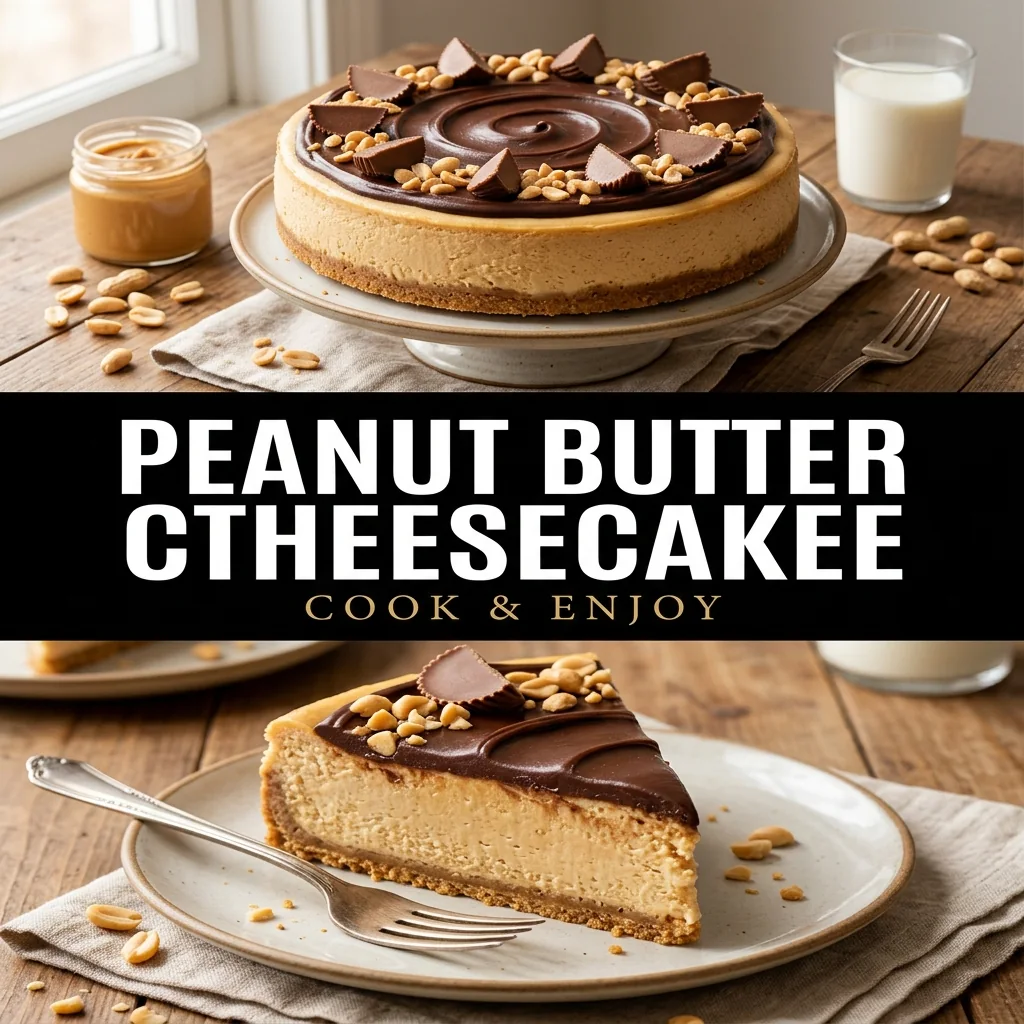
The combination of salty-sweet peanut butter and bittersweet chocolate is an undisputed confectionary classic, and this baked cheesecake elevates that pairing into an extraordinary centerpiece. Built upon a dark, crisp crust made from crushed chocolate sandwich cookies, the interior is rich, silky, and deeply aromatic with real peanut flavor. A gentle water bath ensures that the dense custard bakes without scorching or drying out along the edges, producing a remarkably uniform, velvety crumb from perimeter to core. Finished with a crown of dark, glossy chocolate ganache, this dessert balances richness with depth, making it a standout selection for celebrations, birthdays, and dinner parties that call for an unapologetically decadent finale.
Selecting the Right Peanut Butter
The structural stability of this cheesecake depends heavily on the type of peanut butter you choose. Standard shelf-stable creamy peanut butter contains stabilized hydrogenated oils and a predictable moisture level that emulsifies cleanly into softened cream cheese. Natural peanut butters, which require stirring and contain only peanuts and salt, tend to release free oils under heat. This oil separation can cause the cheesecake batter to curdle or yield a greasy, dense texture. Stick with traditional commercial brands for a reliably velvety, uniform custard.
The Science of the Water Bath
A water bath, or bain-marie, provides an essential buffer against the direct, dry heat of the oven walls. Water cannot rise above 212 degrees Fahrenheit (100 degrees Celsius) at sea level, which means the water surrounding the springform pan regulates the baking temperature gently. This prevents the outer ring of egg proteins from overcoagulating, toughening, or pulling away from the pan while the center finishes setting. Cooling the cake slowly in the humid, turned-off oven further prevents structural shock and unsightly surface fissures.
Slicing Clean, Professional Wedges
Because this cheesecake is exceptionally dense and rich with peanut oils and dairy fats, cutting clean slices requires the right technique. Run a long, thin-bladed chef's knife under hot tap water for 10 seconds, wipe the blade completely dry with a clean cloth, and press firmly downward through the cake in a single, smooth motion. Pull the knife straight out from the bottom crust rather than dragging it back up through the ganache, and wipe the blade spotless between every single slice.
Before you start
Use conventional, emulsified creamy peanut butter rather than natural peanut butter that separates. Natural oils will break out of the emulsion during the gentle baking process, leaving an oily layer on top and a grainier texture in the finished cake. Additionally, protect your springform pan with heavy-duty foil or an oven bag before the water bath to ensure zero moisture seeps into the crispy chocolate crust.
THE RECIPE
Peanut Butter Cheesecake
12 servings · 30 minutes preparation · 75 minutes cooking · 420 minutes cooling, chilling or resting
Ingredients
Step-by-step instructions
- Preheat the oven to 325 degrees Fahrenheit (163 degrees Celsius) and tightly wrap the exterior of a 9-inch springform pan with two layers of heavy-duty aluminum foil to guard against leaks.
- Combine the cookie crumbs and melted butter in a bowl, press the mixture firmly into the bottom and 1 inch up the sides of the prepared springform pan, and bake for 10 minutes; set aside to cool.
- Beat the softened cream cheese, peanut butter, brown sugar, and kosher salt in a large bowl on medium speed for 3 minutes until perfectly smooth and creamy.
- Add the sour cream and vanilla extract, mixing on low speed until combined, scraping down the bowl and paddle to ensure no pockets of unmixed cream cheese remain.
- Add the eggs one at a time on low speed, mixing strictly until the yolk is incorporated before adding the next, avoiding whipping excess air into the dense batter.
- Pour the filling into the cooled crust, smooth the top, place the springform pan into a large roasting pan, and pour boiling water into the outer pan until it reaches halfway up the springform.
- Bake at 325 degrees Fahrenheit for 60 to 65 minutes until the outer ring is puffed and set, but the center 2-inch circle still trembles gently when nudged.
- Turn off the oven, prop the door open slightly with a wooden spoon, and let the cheesecake rest inside the water bath for 1 hour to cool gradually.
- Remove the cheesecake from the water bath, discard foil, chill in the refrigerator for at least 6 hours, then pour warm ganache made from heated heavy cream and chopped chocolate over the top before slicing.
Kitchen notes
Use conventional, emulsified creamy peanut butter rather than natural peanut butter that separates. Natural oils will break out of the emulsion during the gentle baking process, leaving an oily layer on top and a grainier texture in the finished cake. Additionally, protect your springform pan with heavy-duty foil or an oven bag before the water bath to ensure zero moisture seeps into the crispy chocolate crust.
Storage & make-ahead
Keep the cheesecake refrigerated in a covered container or cake dome for up to 5 days. For freezing, slice the chilled, ganache-topped cheesecake and wrap individual portions tightly in plastic wrap and aluminum foil; freeze for up to 2 months. Thaw wrapped slices overnight in the refrigerator before serving. Do not microwave the cheesecake, as this will melt the fat structure and turn the filling oily.
An original recipe guide inspired by themes in our Pinterest research. Recipe has not been independently kitchen-tested. AI-generated image is illustrative; your finished dish may look different.
Frequently asked questions
Can I use crunchy peanut butter instead?
While crunchy peanut butter works technically, it alters the signature satiny mouthfeel of the custard. If you enjoy textural crunch, stick with creamy peanut butter in the batter and garnish the chocolate ganache with chopped roasted salted peanuts instead.
Why did water leak into my springform pan?
Springform pans are rarely completely watertight, and standard aluminum foil often develops pinholes when folded. Use extra-wide, heavy-duty foil without seams, or set the springform pan inside a slightly larger silicone cake pan before placing it in the water bath.
How do I know when the peanut butter cheesecake is done?
Gently shake the roasting pan. The outer 2 to 3 inches of the cheesecake should look matte and firm, while the center should wobble slightly like firm gelatin. If the center sloshes like liquid, continue baking in 5-minute increments.