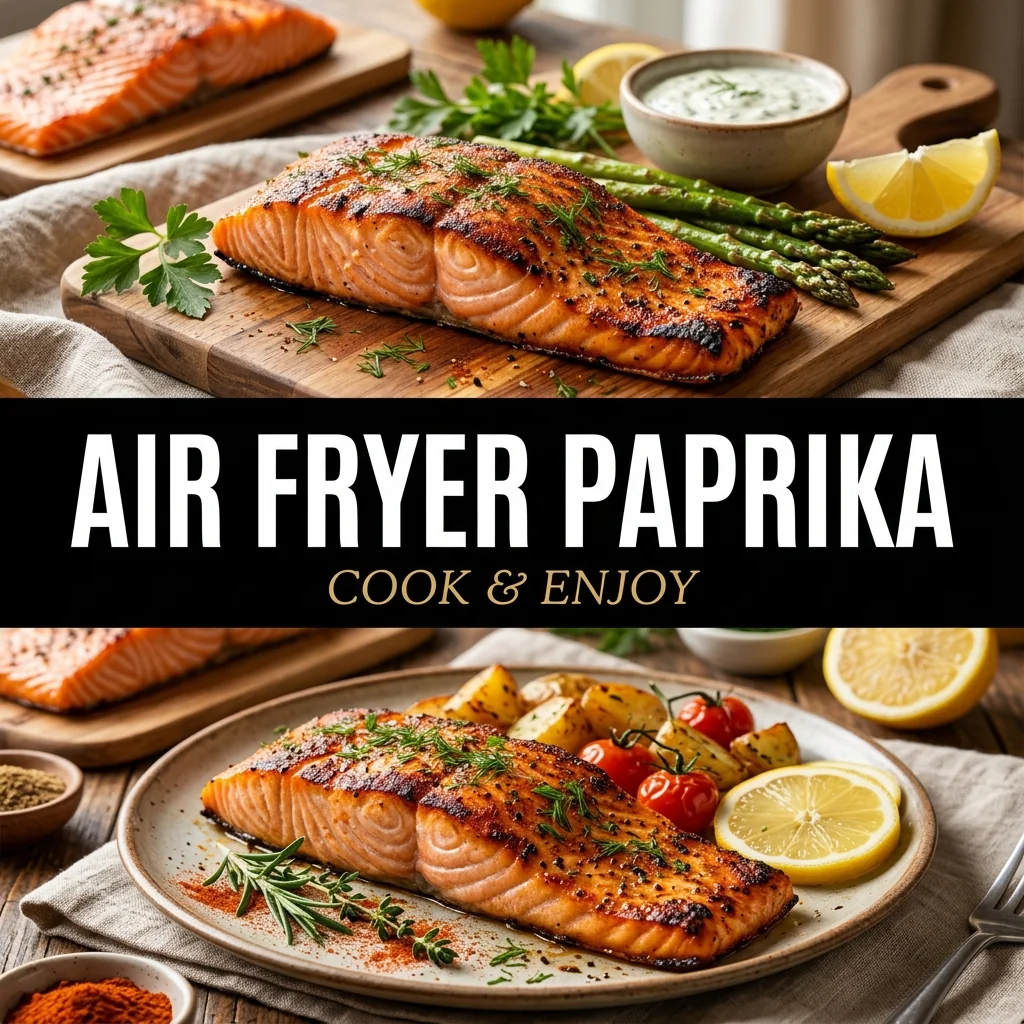
WHY MAKE IT
A little comfort, a lot of flavor.
Air fryer paprika salmon pairs vibrant smoky seasoning with the rapid, circulating convection heat of a countertop air fryer, producing moist salmon with a delicate crust in under ten minutes. The dry heat quickly caramelizes the sweet and smoked paprika blend on the surface of the fish while rendering out excess fat from beneath the skin, preventing dryness. Because salmon fillets cook rapidly under direct top-down heat, this method reliably yields a tender, flaky interior without needing heavy butter sauces or extended oven preheating. It is an efficient, reliable dinner staple that fits seamlessly into busy weekday schedules. Serve alongside roasted asparagus, steamed rice, or crisp green salads to complement the bold, earthy warmth of the paprika rub.
Paprika Profile and Balance
Combining smoked Spanish paprika with sweet Hungarian paprika delivers depth without overwhelming bitterness. Smoked paprika brings an earthy, wood-fired aroma that mimics outdoor grilling, while sweet paprika provides subtle sweetness and vibrant red color. Balancing these spices with granulated garlic, onion powder, and dried thyme creates a well-rounded savory crust. When combined with olive oil, the spices bloom instantly under the air fryer’s intense convection air rather than scorching. If you prefer mild heat, you can introduce a pinch of cayenne pepper or crushed red pepper flakes to the spice mixture without throwing off the balance.
Air Circulation and Spacing
Convection air fryers rely entirely on high-velocity circulating air to crisp food surfaces quickly. If salmon fillets are crowded tightly into the basket or touch the outer edges, trapped steam prevents the exterior from browning and causes the fillets to cook unevenly. Always position the fillets skin-side down with clear spacing between each portion. If cooking in a smaller basket air fryer, prepare the fish in two sequential batches rather than cramming them together. The first batch can rest under a loose foil tent while the second batch cooks, ensuring uniform flakiness across all servings.
Determining True Doneness
Salmon undergoes rapid textural changes once it surpasses its target temperature. Insert an instant-read digital probe thermometer into the thickest section of the fillet; it must register 145°F (63°C) for food safety. Visually, the flesh should transition from translucent coral to an opaque pink hue that flakes naturally when pressed lightly with the edge of a fork. Small beads of white albumin protein may appear on the sides of the fillet, which is standard coagulation, but heavy puddles indicate overheating. Remove the fillets immediately upon reaching temperature to preserve moisture.
Before you start
Uniform fillet thickness is essential when air frying salmon. If your fillets taper sharply at the tail end, tuck the thin flap underneath the fillet to create an even profile that cooks at the same rate as the center cut. Never overcrowd your air fryer basket; if four large fillets cannot sit flat with space around them, cook in two separate batches to avoid steaming the fish rather than searing it.
THE RECIPE
Air Fryer Paprika Salmon
4 servings · 10 minutes preparation · 9 minutes cooking · 3 minutes cooling, chilling or resting
Ingredients
Step-by-step instructions
- Pat the salmon fillets completely dry with paper towels to ensure crispness and help the seasoned oil adhere. Check each fillet carefully for any residual pin bones using clean tweezers, then arrange them skin-side down onto a clean cutting board or sheet tray.
- Whisk the olive oil, smoked paprika, sweet paprika, garlic powder, onion powder, dried thyme, kosher salt, and cracked black pepper together in a small ramekin until a uniform, pourable spice paste forms.
- Brush or rub the paprika mixture evenly across the top flesh and sides of each salmon fillet using a pastry brush or clean fingertips, coating the surface thoroughly while leaving the skin relatively free of excess spice paste.
- Preheat your air fryer to 400°F (204°C) for 3 minutes. Lightly mist the air fryer basket with olive oil cooking spray to prevent sticking, ensuring you do not use aerosol sprays containing propellants that damage nonstick coatings.
- Arrange the seasoned salmon fillets in a single layer in the air fryer basket with at least half an inch of clearance between them to allow hot air circulation. Cook at 400°F (204°C) for 7 to 9 minutes, or until the fish reaches 145°F (63°C).
- Transfer the fillets promptly to a serving platter using a thin, flexible fish spatula, and allow them to rest undisturbed for 3 minutes so the internal juices settle before garnishing with fresh lemon wedges.
Kitchen notes
Uniform fillet thickness is essential when air frying salmon. If your fillets taper sharply at the tail end, tuck the thin flap underneath the fillet to create an even profile that cooks at the same rate as the center cut. Never overcrowd your air fryer basket; if four large fillets cannot sit flat with space around them, cook in two separate batches to avoid steaming the fish rather than searing it.
Storage & make-ahead
Refrigerate leftover cooled salmon in an airtight glass container for up to 2 days. Reheat gently in an air fryer preheated to 300°F (150°C) for 3 to 4 minutes until warmed through, or eat cold flaked over salads. Avoid microwave reheating as it toughens salmon proteins. Cooked fillets can be frozen for up to 1 month, wrapped tightly in plastic and foil. Refrigerate perishable leftovers within 2 hours (within 1 hour above 90°F/32°C), using shallow containers. If reheating, heat throughout to 165°F (74°C).
An original recipe guide inspired by themes in our Pinterest research. Recipe has not been independently kitchen-tested. AI-generated image is illustrative; your finished dish may look different.
Frequently asked questions
Can I use frozen salmon fillets directly in the air fryer?
Thawing fillets overnight in the refrigerator produces far better texture. Cooking directly from frozen leads to uneven doneness, where the surface overcooks before the center warms, and excess moisture dilutes the paprika spice rub. Pat thawed fillets thoroughly dry before seasoning.
Should I keep the skin on during air frying?
Leaving the skin intact during cooking protects the delicate bottom flesh from drying out and helps hold the fillet together during plating. Even if you do not plan to eat the skin, it acts as a thermal shield against the bottom of the air fryer basket.
Why did my spice rub turn dark or bitter?
Paprika contains natural sugars that can scorch if exposed to extreme temperatures for prolonged periods. Cooking at 400°F (204°C) for 7 to 9 minutes balances crust formation and safety without burning the rub, provided the spices are thoroughly coated in olive oil.